






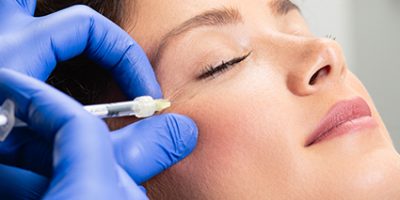

Although anti-aging creams, lotions and serums are often successful in slowing and preventing wrinkle formation, they are ineffective in removing existing deep wrinkles.
The new treatment methods that emerged as a result of the developments in plastic surgery have shown their effects in fighting the symptoms of old age. Dermal fillings injected under the skin to fill and straighten wrinkles on the skin are the most common of these treatment methods. Dermal fillers can be used on the hands as well as laser skin resurfacing. Thus, the face and hands appear at the same age.
Dermal fillers are a type of non-permanent treatment, so it needs to be done over and over to maintain its effects. It will also be ineffective when applied to very flabby skin compared to others. In such cases, facelift treatment would be more appropriate.
Today, one of the dermal fillers in aesthetic surgery is hyaluronic acid fillers.
What is Hyaluronic Acid?
The other most common dermal filling hyaluronic acid, which is an alternative to collagen, is also used in the treatment of wrinkles and lines on the face. Hyaluronic acid is made from balanced hyaluronic acid, which is biodegradable, not of animal origin. This acid is naturally present on the skin and gives the skin fullness and volume. As the age progresses, the amount of hyaluronic acid on the skin decreases and the signs of old age become more evident. The reason why hyaluronic acid injections are so effective in skin treatment is that it increases the level of hyaluronic acid in the skin. Since hyaluronic acid expands by absorbing the surrounding moisture, when injected it has an effect that smoothes lines and wrinkles and makes the skin plump.
What are the features of Hyaluronic Acid Facial Filler?
Hyaluronic acid injections tend to maintain their effect longer than collagen injections. In general, the effect of hyaluronic injection lasts from 6 to 12 months. In this way, you do not have to repeat the treatment too much to ensure the continuity of the effect. In addition, since hyaluronic acid swells the skin with moisture, it gives more natural looking results compared to botox or some face lift operations. This makes hyaluronic acid a preferred treatment, especially in lip plump, smooth nezolobial lines, correcting the appearance and contour of the jaw.
Another advantage of hyaluronic acid is that it is not an animal product. Therefore, it does not cause allergic reactions as it can be in collagen injection. Again, for the same reason, it is not necessary to have an allergy and skin test before treatment.
However, hyaluronic acid therapy usually requires local anesthesia as it is a bit more painful than collagen injection. This may increase the treatment price relatively.
How is skin care after treatment?
A few days after treatment, your face may be a little swollen, red, and the injection areas may hurt slightly. During this time, you should keep your skin as clean as possible to reduce the risk of infection. You can apply natural anti-inflammatory oils to your face to deal with redness. Emu oil is known to be successful in this regard.
In the long term, your goal should be to keep the amount of hyaluronic acid on your skin as high as possible. Hyaluronic acid can be broken down with the hyaluronidase enzyme in the skin. If you can prevent this enzyme from breaking down hyaluronic acid, the effects of the injection will take much longer. One way to do this is to use facial creams that contain Phytessence Wakame extract. This extract from a Japanese seaweed will help you maintain hyaluronic acid in your skin by reducing hyaluronidase activity. You can also find this extract under the following names: Undaria pinnatifida, wakame algae, Japanese brown algae extract, fucodian or fucoxanthin. In addition to this method, you can keep hyaluronic acid supplements at a certain level in your skin.